

What if your child won’t eat dinner?
Does this sound like your child?
They eat breakfast, snacks and lunch fairly well and there is a reasonable spread of different foods.
Then you arrive at dinner and there are only limited choices your child will accept.
If so, you are not alone and this happens whether your child is 2 or 12. They cope reasonably well across the day, and then it comes to dinner, and everything grinds to an ugly halt.
Or maybe you are one of the many parents who have a child who struggles across the day, and dinner is either an extension of the challenge or a whole new world of pain!
Why don’t they eat dinner?
Firstly, it’s good to explore why many children don’t eat dinner.
And although this will obviously vary from family to family and child to child, there are some common reasons why dinner is the most challenging meal of the day:
Lunch is likely to be a food your child can easily eat like a sandwich.

But dinner.
1. Dinner is where:
i) There are integrated dishes. Foods that are mixed together are frequently the hardest to eat. Multiple textures and flavours mixed together are tough. As is not quite knowing what it will feel or taste like.
It’s also hard to know at a glance what is in there. Are all of the foods okay, or is there something in there that a child may not like?
ii) There are vegetables. Vegetables are served and there is an expectation for a child to eat them. Coming to the table knowing foods are ‘supposed’ to be eaten can put a lot of pressure on a child.
2. It’s the end of the day – I am tired by the end of a long day at work as I’m sure are many of you. Your child has been at Kindy, school or running around at home, so they too have had a busy and often challenging day.
By the time dinner rolls around their reserves of energy are depleted. Their sensory cup could be overflowing from all the stimulation and demands of the day. Self-control is at an all-time low.
Dinner is harder just because it is at a time when all of us are less able to cope. This is magnified for young children or those with additional challenges and/or sensory needs.

3. It’s a win/fail meal – dinner often takes on more significance than other meals:
i) Going to bed hungry. Parents frequently stress that if their child doesn’t eat dinner, they will be hungry in the night. And worse, that this will mean they wake up.
ii) Lack of nutrients. When a child is on a limited diet, it’s often a constant worry that they are not eating enough of the ‘good stuff’ to fuel their bodies, brain, and growth.
Dinner is where the veggies and the meat, for example, generally appear. If your child is not eating these it’s a big stress.
4. They are not hungry – children are frequently not hungry, or not hungry enough to eat dinner. Either:

i) Snacks. They have eaten too much in the afternoon so are not hungry enough. Or their snack is too close to dinner, so they are not ready to eat.
ii) Drinks. A child’s stomach is the same size as their fist when they are little (and the size of a grapefruit by 5 years old). It’s therefore, easy to fill up that little space with liquid. The problem is that the liquid gets processed super quickly so half an hour later they are ravenous.
5. Dinner is stressful – when people are relaxed they are able to eat well.
Any time you are angry, anxious, stressed or upset, the body prioritises functions other than eating and digesting.
Many children do not enjoy dinnertime and so are already on the defensive even before arriving at the table. This is going to make the meal that much more challenging for everyone.
What can you do?

There are so many factors that feed into why a child doesn’t eat well at dinner, so covering that all would be half a book, not a quick article. However, there are some basics that can help. Let’s start by working through the reasons dinner doesn’t work!
1. It’s not easy – dinner foods are often more of a challenge for a fussy eater than other meals, but you can in turn make them easier to manage:
i) Deconstruct. Can you cook some foods separately rather than mixing them all together? So plain pasta versus spag bol.
Or make a stir fry, but have some carrot sticks separately on the side as well?
ii) Vegetables. If it’s the vegetables that your child finds the most challenging (or the chicken or the pasta), are you able to serve those foods at other meals as well?
It’s important that your child sees foods over and over to build a basic comfort level with them, and also to have the opportunity to eat them.
But it doesn’t matter when this is.
Serving some cucumber or some chicken pieces alongside the crackers at snack time may be more effective than at dinner.
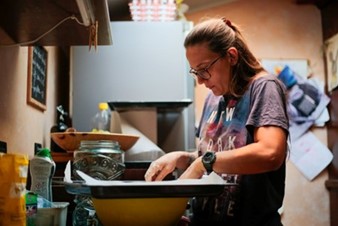 1. It’s the end of the day – unfortunately, not a lot you can do about this!!
i) Simplify – what you can do though is see point 1 above and perhaps do dinner a little differently.
ii) Pre-meal routines – our brain loves to know what’s coming, what’s going to happen. Bedtime routines work for a reason. Implementing a pre-dinner routine can also be helpful in the same way.
iii) Reschedule – sometimes making dinner earlier can be helpful, especially for the littlies. I know getting dinner on the table earlier may seem impossible, but sometimes it just takes a bit of planning.
I was on my own during the week when my boys were little as my husband worked in the country.
That meant I cooked most of Monday night’s meal on Sunday night and most of Tuesdays on Monday night. Despite working all day, I could have meals on the table at a reasonable time – and with less stress.
3. It’s a win/fail meal – this is never a good equation for making you or your child feel comfortable.

Always serve a food they can eat. This helps guard against hunger in the night. It also helps them come to the table happily. The more relaxed they are, the more likely they are to eat the more challenging foods too. Win win.
Even if your child has a super restrictive diet you can serve something at the table they are able to eat. Some fruit, some yoghurt, some bread.
If you are worried about their lack of nutrients, dinner is not a great place to be pushing these onto a child. It’s far better to have these learning opportunities at other meals.
4. They are not hungry – making sure your child is coming into dinner hungry is one of the best ways to get food eaten.
I also appreciate that many selective eaters have got their eating opportunities all mixed up. They often don’t eat much at school/kindy, so are ravenous when they get home. Then they want to scoff everything in sight, then are not hungry for dinner.
If this is the case, there are multiple challenges to resolve, however, one solution – if you can – is to serve some of the dinner foods alongside the snack foods in the afternoon. This can be the easiest one to solve from a practical point of view.

It may also be a challenge if your child is at after-school care or daycare with the dreaded ‘late snack’.
5. Dinner is stressful – many times this is up to us as a parent. If I am stressed, I communicate that to everyone else. It’s tough for my children to be relaxed if I’m not. If dinner is a battleground it works against everyone.
It’s also easier to change my behaviour than theirs.
Some ways to reduce stress:
i) Dinner is not the place to teach someone to eat. If it’s not, don’t try!
ii) Don’t fight. Whatever is happening – about the food – do not push, get upset, argue with a child, if you want them to eat.
iii) Pre-dinner routine. A pre-dinner routine is important for all children, but more so for those with sensory needs. Ensuring they are able to come to the table in a relaxed state really helps.
iv) Practice making it fun. If the table is not a happy place, what can you do to make it into one?
v) Change the dynamic. Part of the stress about meals is because your child is coming to the table already expecting it to be awful/challenging/not what they want to eat.

Instead, if they know that there will always be something that is within their comfort zone it can be super helpful. For children, particularly with food anxiety or who are on the spectrum, knowing in advance what is on the menu can be comforting.
Does your child struggle to eat dinner? Or do you have some great tips to share?
Judith, MA Cantab (Cambridge University), MSc Psychology (first-class honours), is working on a PhD, an AOTA accredited picky eating advisor and internationally certified nutritional therapist. She works with 100+ families every year resolving fussy eating and returning pleasure and joy to the meal table.
She is also mum to two boys and the author of Creating Confident Eaters and Winner Winner I Eat Dinner. Her dream is that every child can approach food from a place of safety and joy, not fear.
Learn more about Judith here: https://theconfidenteater.com/about/